If you’re new to the stock market, terms like “gap up” and “gap down” might seem confusing at first. These terms refer to sudden price changes in stocks that happen between one trading day and the next, often creating an empty space or “gap” on stock charts. Understanding what these gaps mean, how they happen, and how traders use them can help you navigate the stock market more confidently.
This detailed guide will explain gap ups and gap downs, how they work, why they occur, and how traders use them for potential profit. Whether you’re a beginner investor or just want to understand how price fluctuations affect stocks, this guide will break it down in a simple, easy-to-understand way. A gap occurs when a stock or market opens up at a different price from where it closed the previous day. Gaps are very common in the financial markets. We say they “gap up” or “gap down”.
What Are Gap Up and Gap Down?
A gap in the stock market occurs when a stock opens at a significantly different price from where it closed on the previous trading day. This creates an empty space, or gap, between the closing price of one day and the opening price of the next day.
Gap Up
A gap up happens when a stock opens at a higher price than the previous day’s closing price. For example, if a stock closed at ₹100 yesterday and opens at ₹105 the next day, that’s a gap up. The price jumps upward, leaving an empty space between the previous day’s closing price and today’s opening price.
Gap Down
A gap down occurs when a stock opens at a lower price than its closing price from the previous day. For example, if a stock closed at ₹100 yesterday and opens at ₹95 the next day, that’s a gap down. The price drops sharply, creating an empty space between the two prices.
These price gaps often happen due to significant news, events, or earnings reports released after the market closes. For example, a company might announce positive earnings, causing its stock to jump (gap up), or there could be negative news about the company, causing the stock to fall (gap down).
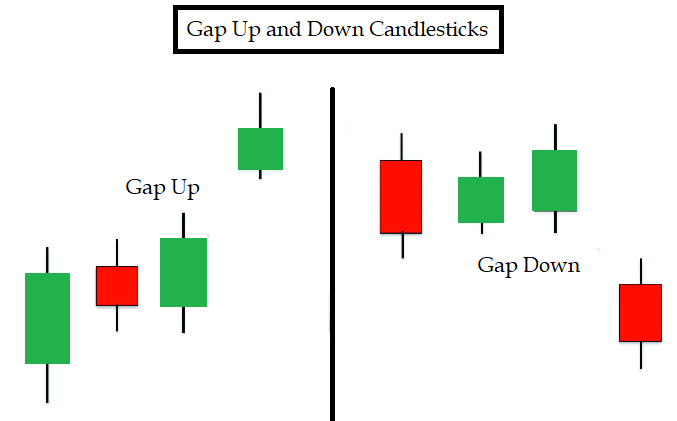
Daily gaps are more common than weekly, monthly or any other intraday charts. You can find daily gaps in intraday charts at the open.
Why Do Gaps Happen?
Gaps occur when there’s a sudden change in how investors perceive the value of a stock. This typically happens outside of regular market hours when the stock market is closed but after-hours trading takes place. During after-hours, investors may react to breaking news, earnings reports, or other significant events, which can lead to a large shift in a stock’s price. When the market opens the next day, the price difference between the closing price of the previous day and the opening price of the current day is what creates the gap.
Common Causes of Gaps
Here are some common reasons why gaps happen:
Breaking News
Important news about a company, industry, or the economy that is released after market hours can cause a large shift in stock prices. For example, a major product launch, a scandal, or an unexpected event can trigger a gap up or gap down.
Earnings Reports
Companies typically release quarterly earnings reports after the market closes. If a company reports much higher or lower earnings than expected, it can cause its stock price to jump or drop significantly. For example, a company reporting better-than-expected earnings might cause the stock to gap up.
Macroeconomic Events
Major economic news, such as a change in interest rates, new government policies, or international events like a war or a natural disaster, can impact the market and create gaps.
Upgrades or Downgrades
When analysts or credit rating agencies upgrade or downgrade a stock’s rating, it can lead to significant changes in price, causing a gap up or gap down.
Types of Gaps in the Stock Market
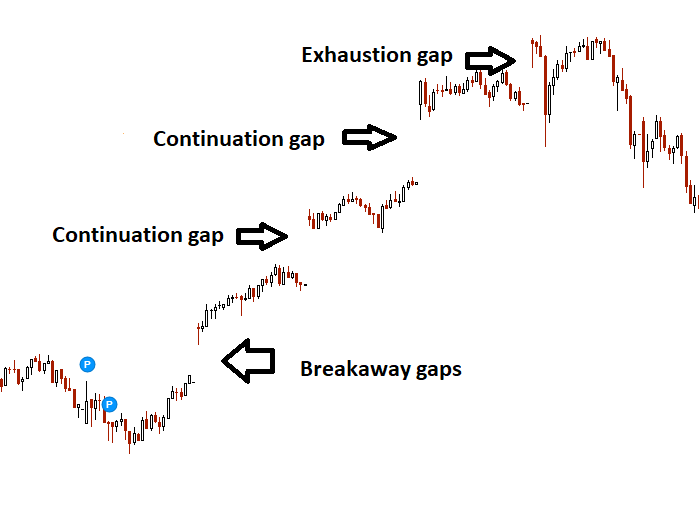
While gaps occur regularly in the stock market, they come in different types, each of which has a unique significance for traders. Let’s take a look at the four main types of gaps:
We have four type of gaps;
- Common gaps
- Breakaway gaps
- Continuation or runaway or measuring gaps
- Exhaustion gaps
1. Common Gaps
Common gaps are the most frequent type of gap and occur during periods of sideways market movement or low volatility. These gaps typically happen due to an imbalance between the number of buy and sell orders. Common gaps are often filled quickly, meaning the stock price will likely return to its previous level soon after the gap occurs. These gaps usually don’t indicate a major change in the trend or direction of the stock.
2. Breakaway Gaps
A breakaway gap happens when a stock moves sharply in a new direction after breaking through a key level of support or resistance. This type of gap usually happens after a period of consolidation, where the stock has been stuck in a range. A breakaway gap signals the start of a new trend, either bullish (if the price moves upward) or bearish (if the price moves downward).
Traders often watch for these gaps because they can present excellent opportunities to enter a new trend early. Breakaway gaps are less likely to be filled quickly compared to common gaps because they often mark the beginning of a strong move in the market.
3. Runaway Gaps (Continuation Gaps)
Runaway gaps, also known as continuation gaps, occur during strong trends, either upward or downward. These gaps typically happen in the middle of a trend and indicate that the current price movement is likely to continue. If the stock is in a strong uptrend and a gap up occurs, it suggests that more buyers are coming into the market, and the price is likely to continue rising.
Runaway gaps are considered signs of a strong, ongoing trend and may last longer than common gaps. Traders often use these gaps to confirm the direction of the trend and enter the market at the right time.
4. Exhaustion Gaps
An exhaustion gap happens at the end of a strong trend. After a stock has been moving in one direction for a long time, it might suddenly gap up with higher-than-normal volume, signaling that the trend may be losing steam.
Exhaustion gaps can be tricky because they sometimes signal the beginning of a reversal, where the stock may move in the opposite direction. However, they can also just indicate a temporary pause or a consolidation phase before the trend resumes. Traders watch exhaustion gaps closely because they can often lead to significant reversals or a slowdown in the trend.
How Gaps Impact Stock Prices
Gaps can significantly affect stock prices, creating volatility and offering new trading opportunities. Here are some key points to keep in mind about how gap ups and gap downs impact stock prices:
1. Increased Volatility
Gaps often lead to large price movements, making the market more unpredictable in the short term. When a stock opens much higher or lower than its previous day’s close, it creates a lot of price fluctuations that can make it harder for traders to predict where the stock will move next.
2. Trend Continuation
If a gap occurs in the direction of an existing trend, it may signal that the trend will continue. For example, if a stock has been in an uptrend and then opens higher (gap up), it may indicate that the uptrend is still strong.
3. New Support and Resistance Levels
Gaps can create new levels of support (a price level where the stock tends to bounce back up) or resistance (a level where the stock tends to face downward pressure). These levels act as barriers, and stocks may struggle to move past these new price points.
Trading Strategies for Gaps
Traders often look for gap ups and gap downs because these events can provide valuable trading opportunities. Here are some common strategies used by traders to capitalize on gaps:
1. Gap Trading
Gap trading involves trading stocks that have formed a gap. Traders may wait to see if the gap fills (meaning the stock price returns to its previous level) or take a position to ride the new trend suggested by the gap.
2. Fade the Gap
In this strategy, traders bet against the gap. If a stock gaps down (drops sharply), traders might buy the stock, expecting that the price will bounce back and fill the gap later in the day.
3. Gap Fill Strategy
Many traders believe that most gaps will eventually be filled, meaning the price will return to its previous level. This is the gap fill strategy, where traders enter trades betting that the stock will reverse and fill the gap within the same trading day.
Risks and Rewards of Trading Gaps
While trading gaps can be profitable, they come with risks. Here are some potential risks to consider:
- High Volatility: Gaps can cause sharp price movements, and if you’re not careful, you may end up losing money if the price moves against your position.
- False Signals: Sometimes, a gap might not be as meaningful as it first seems. For instance, a gap up might happen due to a temporary news event that doesn’t reflect the stock’s true value, leading to a reversal later on.
To manage these risks, traders use technical analysis and set strict risk management rules, like stop-loss orders, to protect their investments.
Conclusion
Understanding gap ups and gap downs is crucial for stock market traders. These gaps can provide important clues about the market’s direction and offer opportunities for profit. However, trading gaps also comes with risks due to their volatility and the possibility of false signals.
To succeed in gap trading, it’s essential to learn how to spot trends, understand the underlying reasons for the gap, and use technical analysis to make informed decisions. By incorporating these strategies into your trading approach, you can better navigate the stock market and make more confident investment choices.
Frequently Asked Questions
How do I know if the market will open with a gap?
Gaps are usually caused by breaking news or earnings reports, so staying updated on the news and analyzing market sentiment can help predict when a gap might occur.
Are gaps always a sign of a trend change?
Not necessarily. While certain gaps, like breakaway gaps, indicate the start of a new trend, common gaps often don’t have a major impact on the stock’s direction.
What are the risks of trading gaps?
The primary risks include high volatility, false signals, and unexpected reversals. Traders should use proper risk management strategies, such as stop-loss orders, to protect their investments.
Disclaimer: In addition to the disclaimer below, please note, this article is not intended to provide investing or trading advice. Trading in the stock market and in other securities entails varying degrees of risk, and can result in loss of capital. Most investors and traders lose money. Readers seeking to engage in trading and/or investing should seek out extensive education on the topic and help of professionals.
